 Bright Solution
 Property Laws and Regulations
 June 25, 2025
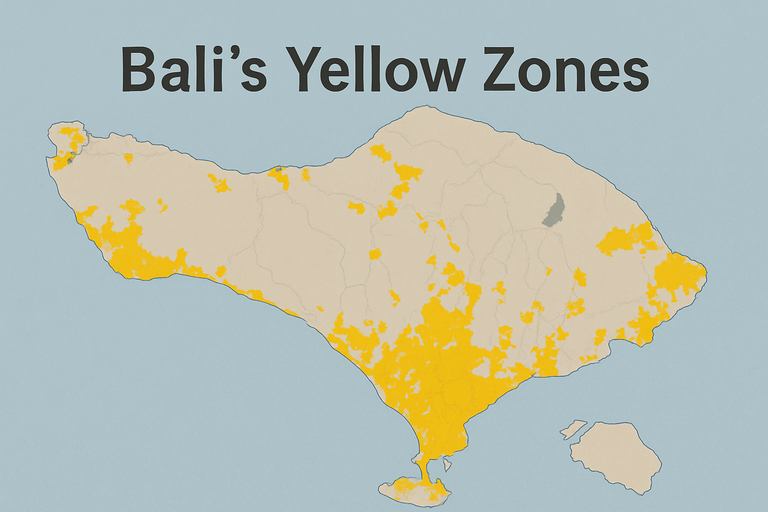
The yellow zone is a term used in spatial planning to describe areas that are designated specifically for residential purposes. Technically, the term comes from the yellow color used in official zoning maps, where this color represents residential functions
Bali is increasingly recognized as one of the top destinations for foreign investors interested in the property sector. From private villas to short term accommodation projects, the island offers strong appeal. However, behind these opportunities lies one crucial factor that is often overlooked by many investors, which is land zoning status. The term yellow zone in Bali refers to areas designated for residential purposes. Although these areas may seem promising due to their strategic location and attractive property values, they are subject to strict legal limitations. Commercial activities such as villa rentals or hospitality-based businesses are generally not permitted for foreign entities, especially those using a legal structure like a PT PMA.
Through this article, you will gain a complete understanding of what the yellow zone in Bali means, why foreign investors should be cautious, and what strategies can be used to invest safely and legally in Bali. By understanding the legal framework and regulations from the start, you can avoid unnecessary risks and make smarter investment decisions.
What Is the Yellow Zone and Why Does It Matter to Investors?
The yellow zone is a term used in spatial planning to describe areas that are designated specifically for residential purposes. Technically, the term comes from the yellow color used in official zoning maps, where this color represents residential functions. Although legally defined as residential zones, the public and many in the property industry more commonly refer to them as yellow zones because of how they appear in planning documents.
In Bali, according to local regulations, these zones are intended only for residential buildings or small scale domestic activities that do not disrupt the nature of the area. This means that building villas, guesthouses, or any commercial property is highly restricted, especially when done by foreign owned companies such as a PT PMA.
Yellow zones have become a point of interest because many strategic land plots are located within them. Prices are often more attractive compared to land in tourism or commercial areas. As a result, many foreign investors are drawn to these zones without fully realizing the legal restrictions involved. In many cases, properties purchased in yellow zones cannot be granted commercial operation permits, such as building approvals or lodging licenses, making it impossible to legally operate them as rental villas or hospitality businesses.
Legal Restrictions for PMA in Yellow Zones or Residential Zones
A Foreign Investment Company (PMA) is a legal entity commonly used by foreign nationals to invest in Indonesia. While a PMA is officially recognized as a legitimate business structure, its operation within residential zones often referred to as yellow zones is subject to strict limitations, especially in Bali.
These zones are designated solely for residential use and small-scale domestic activities. In practice, PMAs are not permitted to engage in commercial operations such as daily villa rentals within these areas. Business licenses for accommodations, guesthouses, or hotels will not be approved if the property is located in a residential zone. Moreover, special permits such as Pondok Wisata which allow limited lodging operations cannot be obtained by PMAs, as they are strictly reserved for Indonesian individuals.
PT PMAs also face significant obstacles when applying for essential permits like PBG (Building Approval) and SLF (Certificate of Proper Function) if the property is located in a zone not intended for commercial use. Without these permits, the building cannot be legally operated, and any unauthorized use may result in sanctions from local authorities.
For this reason, it is crucial for foreign investors to clearly understand the zoning classification before purchasing or leasing any property in Bali, to avoid legal complications and unnecessary financial losses.
Common Legal Risks: From Permit Denials to Unlawful Operations
Many foreign investors in Bali encounter serious challenges when the property they purchase falls within a residential or yellow zone. In these areas, using property for business activities such as daily villa rentals is not allowed under local regulations. As a result, it becomes difficult or even impossible to obtain key permits like the Building Approval (PBG) and the Certificate of Proper Function (SLF). Without these documents, the property is considered to be operating outside the legal framework. Some owners continue their rental operations despite the lack of proper licensing, which places the property in an illegal status and exposes it to administrative sanctions, sealing, or other actions from local authorities.
In an attempt to avoid these restrictions, some investors choose to register the business license under the name of an Indonesian citizen in order to apply for a Pondok Wisata permit. While this might seem like a practical workaround in the short term, it presents serious legal and ownership risks in the future. Apart from potential financial losses, the business may also suffer reputational damage if enforcement measures are taken by the government. This highlights the importance of understanding zoning rules and permit requirements early in the investment process to ensure a secure and lawful operation.
Pondok Wisata: A Legal Framework Not Available to Foreign Investors
Pondok Wisata is a type of accommodation license specifically reserved for individual Indonesian citizens. This permit allows homeowners to rent out a portion of their residence as small scale lodging, such as a guesthouse or homestay. The license is granted under the condition that the owner resides at the same location and does not operate the business as a large scale commercial enterprise. As a result, this type of permit cannot be obtained or held by foreign owned companies such as a Foreign Investment Company (PT PMA).
Although many foreign investors attempt to collaborate with local property owners to make use of this license, such arrangements carry legal risks and do not offer long term security. In the event of a dispute or a change in policy, the legal status of the property becomes vulnerable. In some cases, local governments may revoke the license or take enforcement action if any misuse involving foreign parties is discovered. Therefore, relying on a Pondok Wisata license as a legal solution is not a recommended strategy for foreign investors who aim to develop or professionally manage property in Bali.
Investment Zones That Are Safe and Accessible for Foreign Investment Companies
Unlike residential zones, there are several areas in Bali that are legally open to and supportive of foreign investment activities. These include tourism zones, commercial zones, and mixed use zones. Within these areas, activities such as villa development, short term rentals, and hospitality related businesses are permitted for legal entities like a Foreign Investment Company (PT PMA). Additionally, the process of obtaining permits such as the Building Approval (PBG), Certificate of Proper Function (SLF), and business operation licenses is more accessible and can be completed in accordance with applicable regulations.
Choosing a property located in the correct zoning area not only ensures legal certainty but also offers long term advantages, whether for project development, future expansion, or resale purposes. For this reason, before purchasing or leasing land in Bali, it is strongly recommended to verify the zoning status through official spatial planning documents issued by the local government or consult with a legal advisor familiar with local regulations. This step is essential to ensure that your investment is not only profitable but also lawful and sustainable.

Legal Alternatives: Is Partnering with a Local PT a Viable Solution?
Faced with legal limitations surrounding property ownership and operations in residential zones, some foreign investors have begun to explore collaboration schemes with local entities, such as a Domestic Investment Company (PT PMDN) or individual Indonesian citizens. In such arrangements, the asset remains under local ownership, while the foreign investor acts as an operational partner or financial backer. This approach can serve as a temporary workaround for operating in areas that are not legally accessible to a PT PMA, including residential or yellow zones.
However, it is important to understand that this strategy carries several risks, both legal and relational. Without a solid agreement structure and clear legal safeguards, such partnerships may lead to conflicts of interest, ownership disputes, or even unilateral asset takeovers. Therefore, if a foreign investor chooses to pursue a collaborative path, it is highly recommended to engage an experienced legal advisor to design a partnership that is transparent, compliant, and legally binding. Collaboration can be a solution, but only if it is carefully and professionally structured.
Recommendations: Safe Steps Before Buying or Leasing Property
Property investment in Bali in 2026, especially by foreign investors, requires a solid understanding of the legal framework and licensing procedures. The first and most important step is to verify the zoning status of the land. This can be done by requesting an official copy of the regional spatial plan from the relevant government office or by consulting a notary or legal advisor with experience in property matters.
It is also essential to confirm that all required permits, such as the Building Approval and business operation license, can be obtained based on the type of legal entity you are using. If you are operating through a Foreign Investment Company in 2026, make sure the property is located in an area legally designated for commercial or tourism use. Avoid placing assets under an Indonesian citizen’s name without proper legal protection, as this kind of arrangement can lead to disputes in the future. Establishing a sound legal strategy from the beginning will not only ensure compliance but also protect the long term value of your investment.


