 Bright Solution
 News, Market Trends
 February 11, 2026
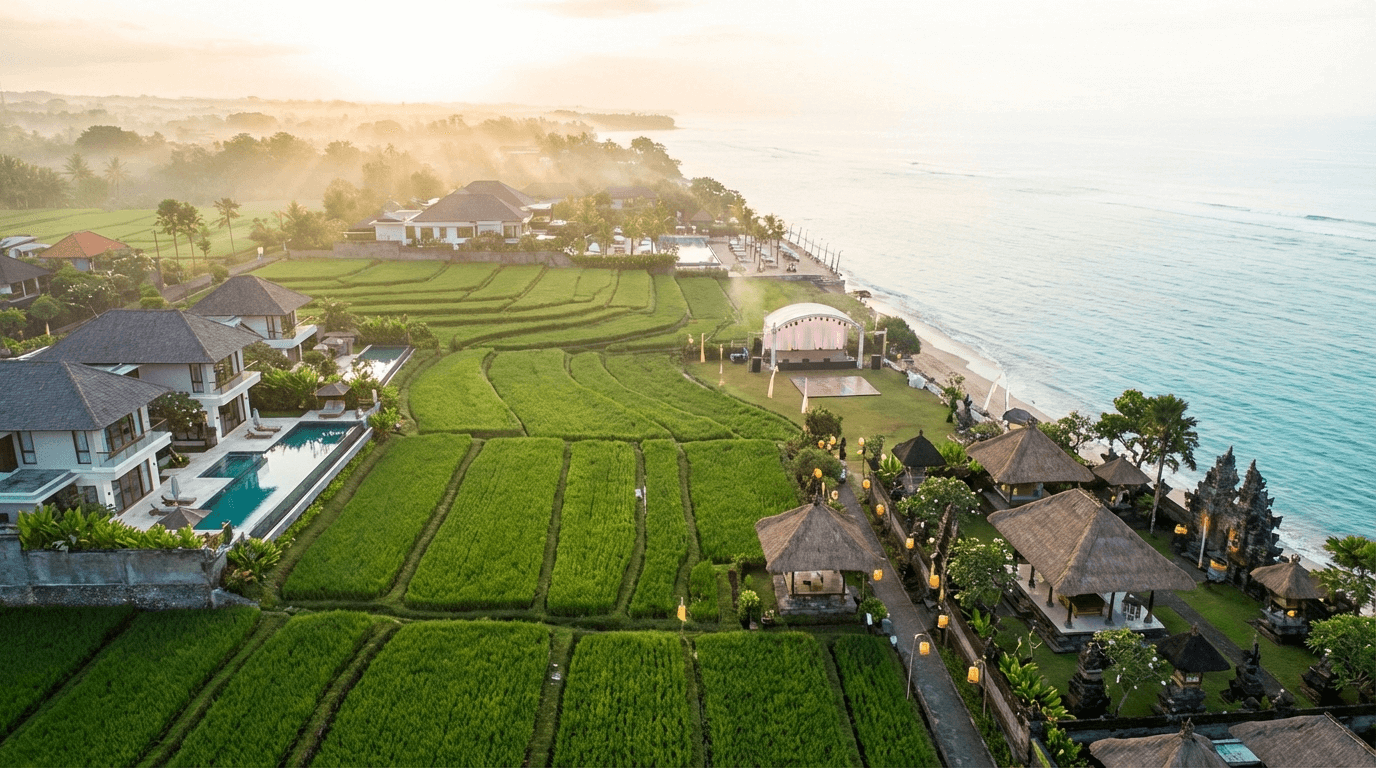
After several years of steady recovery and positive growth in tourism, Bali is taking a more strategic step forward with the launch of the Bali Events Calendar 2026. This calendar is not merely a list of annual activities, but part of a broader government strategy to create a more structured, evenly distributed, and sustainable tourism ecosystem. By spreading events throughout the year, Bali aims to generate a more stable flow of visitors while reducing peak season congestion, allowing travelers to enjoy a more comfortable experience and businesses to benefit from more consistent demand.
At the same time, the calendar combines the preservation of local culture with modern international scale events, ranging from traditional festivals to sports, wellness, and business gatherings. For the property and investment sectors, year round tourism activity sends a strong positive signal, as it supports more stable accommodation occupancy, opens growth opportunities in emerging areas, and contributes to long term real estate value appreciation. For this reason, the Bali Events Calendar 2026 is relevant not only for tourists, but also for investors and hospitality business players.
More Stable Tourism in Bali Throughout the Year
One of the main objectives behind the Bali Events Calendar 2026 is to create a more balanced tourism rhythm from month to month. By distributing events evenly throughout the year, Bali no longer relies solely on specific peak periods, but instead encourages consistent and sustainable tourism activity. This approach is implemented through several concrete measures.
Reducing dependence on the high season
For many years, tourist arrivals in Bali have tended to concentrate during holiday periods such as mid year and year end. This situation often leads to overcrowding, rising prices, and increased pressure on infrastructure and the environment. By scheduling events across different periods, visitor flows can be distributed more evenly, keeping destinations comfortable while making them easier to manage.
This pattern helps Bali avoid extreme spikes in tourism while maintaining a high quality experience for visitors.
Providing certainty for businesses and travelers
A well structured events calendar also offers significant planning advantages. Travelers can schedule their trips based on the events they are interested in, while businesses such as hotels, villas, restaurants, and tour operators can prepare their operational and marketing strategies well in advance.
With more predictable demand, tourism related businesses have a better opportunity to maintain stable revenue and reduce the risks of prolonged low seasons, creating a healthier and more sustainable business ecosystem across Bali.
Preserving Local Culture While Developing Modern Events
In addition to promoting more stable visitor flows, the Bali Events Calendar 2026 is also designed to maintain a balance between cultural identity and modern tourism development. Bali does not focus solely on increasing tourist numbers, but also ensures that every activity remains aligned with the island’s local character, which is its main attraction. This approach is reflected in how the government structures its event programs, combining authentic Balinese traditions with contemporary activities that appeal to the global market.
Traditional festivals and cultural heritage
Various traditional ceremonies, religious celebrations, and art and cultural festivals remain the foundation of the annual calendar. Activities such as traditional dance performances, local handicraft exhibitions, and village celebrations offer visitors the opportunity to experience the authentic side of Bali on a deeper level.
These culture based events also play an important role in preserving traditions while supporting the local economy, benefiting artists, craftsmen, and small and medium enterprises.
International, sports, and lifestyle events
At the same time, Bali has become increasingly active in hosting international scale events, including wellness festivals, sports competitions, music concerts, creative exhibitions, and business conferences. These events attract a more diverse market segment, ranging from professionals and global communities to travelers with specific interests.
The combination of local traditions and modern events strengthens Bali’s position not only as a holiday destination, but also as a hub for lifestyle, creativity, and global activities in Asia.
Positive Impact on the Property and Investment Sector
A more stable year round tourism rhythm benefits not only travelers and hospitality businesses, but also creates a ripple effect across the property and investment sectors. As visitor flows become more consistent, the demand for accommodation, commercial spaces, and supporting services increases sustainably. This is what makes the Bali Events Calendar 2026 an important catalyst for real estate growth across various parts of the island. The impact can be seen in several key areas.
More consistent accommodation demand
With events taking place throughout different months of the year, occupancy rates for hotels, villas, and rental properties no longer depend solely on holiday seasons. Occupancy tends to be more evenly distributed year round, allowing property owners to maintain stable cash flow and minimize prolonged low season periods.
This condition provides better income certainty, especially for investors who rely on daily or mid term rental business models.
Growth potential in emerging areas
The distribution of events across multiple regions also encourages visitors to explore destinations beyond traditional hotspots such as Kuta or Seminyak. Emerging areas like Tabanan, Mengwi, and the eastern coastline are gaining attention as new locations for both stays and investment opportunities.
This shift opens the door for property development projects with still competitive land prices and strong prospects for future value appreciation.
Long term real estate value appreciation
When a destination has a well planned and sustainable calendar of activities, market confidence in the area’s stability naturally increases. For investors, this translates into lower risk and stronger potential for asset appreciation.
In the long run, the combination of tourism growth, infrastructure improvements, and consistent accommodation demand will support healthier and more sustainable increases in Bali’s real estate values.
Bali’s Commitment to High Quality Tourism Growth
The various positive impacts on the property and investment sectors ultimately stem from Bali’s commitment to building higher quality tourism, rather than simply pursuing greater visitor numbers. The government and key stakeholders now emphasize a balance between economic growth, cultural preservation, and environmental sustainability through structured event planning, destination zoning regulations, and continuous infrastructure improvements. This approach is designed to create a healthier, well managed tourism ecosystem that can deliver long term benefits for local communities.
With this strategy, Bali is becoming increasingly attractive to travelers and investors seeking stability and high value experiences, ranging from business professionals and wellness communities to long term property owners. More consistent and well directed visitor flows make accommodation demand and economic activity more predictable throughout the year.
This commitment is reflected in the systematic planning of events, as demonstrated in the following lineup of Bali’s 2026 events.
Bali 2026 Events Throughout the Year: A Summary
To provide a clearer picture of Bali’s tourism rhythm, here is a summary of the Bali 2026 events organized by time period.
The Bali Events Calendar 2026 features year round programs designed to support consistent tourism activity across the island. Although event dates and details may change, the following overview outlines the main periods during which major events are expected to take place.
Bali Events January to March 2026: Tourism and Cultural Gatherings
- Local rituals and cultural ceremonies, including a series of activities leading up to Nyepi and other holy days
- Festivals and spiritual events that highlight Balinese traditions and values
- Community celebrations and tourism related gatherings held across different regions
Bali Events April to June 2026: Arts Festivals Sports and the Creative Economy
- Art festivals and traditional performances that strengthen Bali’s cultural heritage
- Open sports and lifestyle events that invite visitor participation
- Exhibitions and creative economy showcases featuring collaborations between local artisans and designers
Bali Events July to September 2026: Peak Season Festivals and International Programs
- Large scale cultural and arts festivals during the peak travel season
- International music programs and global cultural exchanges
- Exhibitions and sports competitions that attract visitors from various countries
Bali Events October to December 2026: Cultural Festivals Literary Events and Lifestyle Celebrations
- Culinary festivals and creative industry events that celebrate local flavors and innovation
- Music, literature, and heritage festivals hosted across major destinations
- Closing year cultural celebrations that honor local traditions and community spirit
Source: Link
Bali’s Prospects as a Long Term Tourism and Investment Destination
With a well organized calendar of activities throughout the year, Bali is increasingly demonstrating a more mature and sustainable direction for tourism development. This approach not only helps maintain stable visitor numbers, but also builds a stronger economic foundation, as demand for accommodation, hospitality services, and commercial activities becomes more predictable. For travelers, this means a more comfortable and enjoyable experience, while for businesses and investors, such stability provides greater certainty for long term planning.
Looking ahead, the combination of rich cultural heritage, international event agendas, infrastructure improvements, and the growth of emerging areas keeps Bali competitive not only as a leading travel destination but also as a promising property market in Indonesia. With reduced seasonal risks and more consistent occupancy rates, investment opportunities in real estate, rental villas, and commercial assets are expected to continue expanding. This is what strengthens Bali’s position not just as a holiday spot, but as a sustainable and strategically valuable long term investment ecosystem.


