 Bright Solution
 Investor Guide
 April 30, 2025

ROI, or Return on Investment, in the context of property, is used to measure the net profit generated from a property compared to the total capital invested in purchasing and operating it.
In property investment, the term ROI (Return on Investment) is often a key consideration before an individual or investor decides to purchase an asset. ROI helps answer a simple yet fundamental question: will this property generate returns that justify the capital invested?
For investors, understanding how ROI works can be an essential tool to evaluate whether a property is worth buying and managing as a productive asset.
What is ROI in Property Investment and Why is it Important to Know?
ROI, or Return on Investment, in the context of property, is used to measure the net profit generated from a property compared to the total capital invested in purchasing and operating it.
ROI is expressed as a percentage, and the higher the value, the more profitable the investment. Investors use ROI as a basis for:
- Comparing multiple properties under consideration
- Measuring the effectiveness of asset management
- Determining whether short-term or long-term rental strategies are more optimal
- Making decisions to sell, hold, or develop a property
How Does ROI (Return On Investment) Work?
Wondering how ROI works in property? an example case is an off-plan project in Kelating, Tabanan. This area is increasingly attracting investors thanks to its natural beauty and its appeal to tourists seeking a more peaceful and authentic side of Bali.
*not familiar with the term? find out what an off-plan project is here.
Investment Details:
You purchase an off-plan villa (a new project directly from the developer) at the following price:
- Villa purchase price: IDR 2,000,000,000
- Renovation & furnishing costs: IDR 0 (the property is brand new and fully furnished)
- Total investment: IDR 2,000,000,000
This villa is then rented out to tourists and digital nomads through platforms like Airbnb, with the following assumed income:
Annual Rental Income:
- Average nightly rental price: IDR 1,500,000
- Average occupancy: 18 nights per month × 12 months = 216 nights
- Total annual income: IDR 1,500,000 × 216 = IDR 324,000,000
Yearly Rental Income:
- Taxes & permits: IDR 7,000,000
- Electricity, water, and internet: IDR 18,000,000
- Staff salaries & routine maintenance: IDR 45,000,000
- Platform fees (Airbnb, Booking.com, etc.): IDR 25,000,000
- Total operating costs: IDR 95,000,000
Annual Net Profit:
IDR 324,000,000 (annual income) − IDR 95,000,000 (operating costs) = IDR 229,000,000
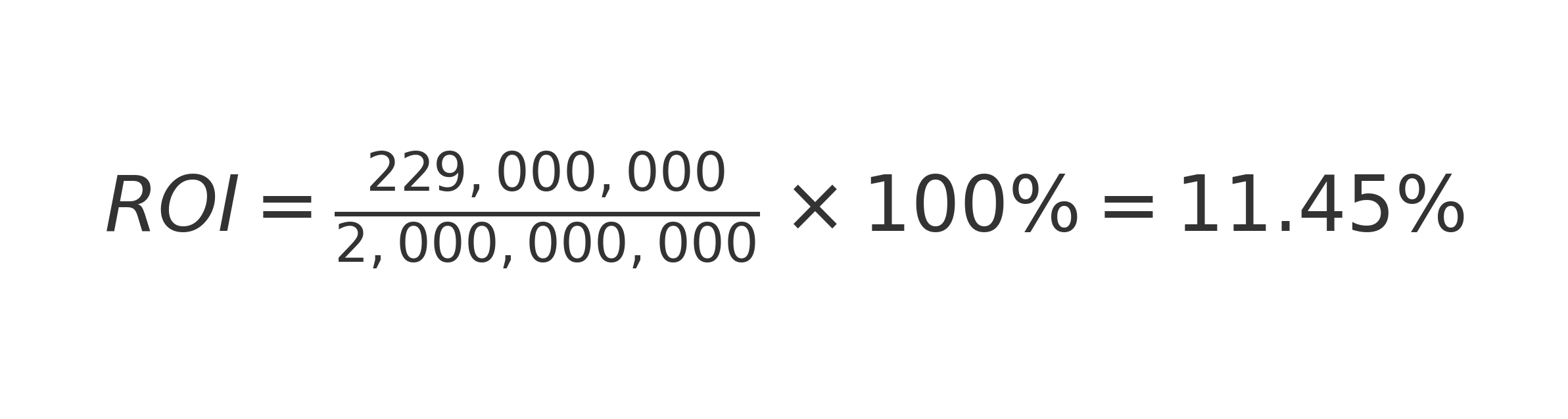
The ROI for this off-plan project in Kelating, Tabanan is 11.45%. This shows quite an attractive potential. Although it's lower than investments in areas like Canggu, which tend to have more tourists, the profit from off-plan properties usually lies in the long to medium term value increase, as the purchase price is lower compared to ready to move in properties.
*interested in an off-plan project in Kelating, Tabanan? click to explore.
Summary
From this example case, we can see that calculating ROI, or What Is ROI in Property Investment, is a simple yet crucial step in evaluating the potential of a property investment. Whether it’s an off-plan project like in Tabanan or ready-to-move-in properties in other areas, the basic principle remains the same: ensure the numbers make sense and align with your long-term strategy.
Each type of property has its own advantages and challenges. New properties offer initial convenience, while existing properties might generate quicker returns if they are in a strategic location. The most important thing is to conduct a thorough analysis and manage your assets wisely so that your investment can grow sustainably.


